Responsible participation

Keep the evening considered

Aceand Marble is an independent restaurant and offline poker information experience for adults aged 21 and over. This guide is here to help guests approach Texas Hold’em as social entertainment: with room to choose, pause, observe, or step away whenever that feels right.


Hosted sessions, dealers, poker tables, poker nights and chip-based participation work best when every guest protects their own comfort and respects the shared room. Watching, taking a break, or leaving active participation are all valid choices.

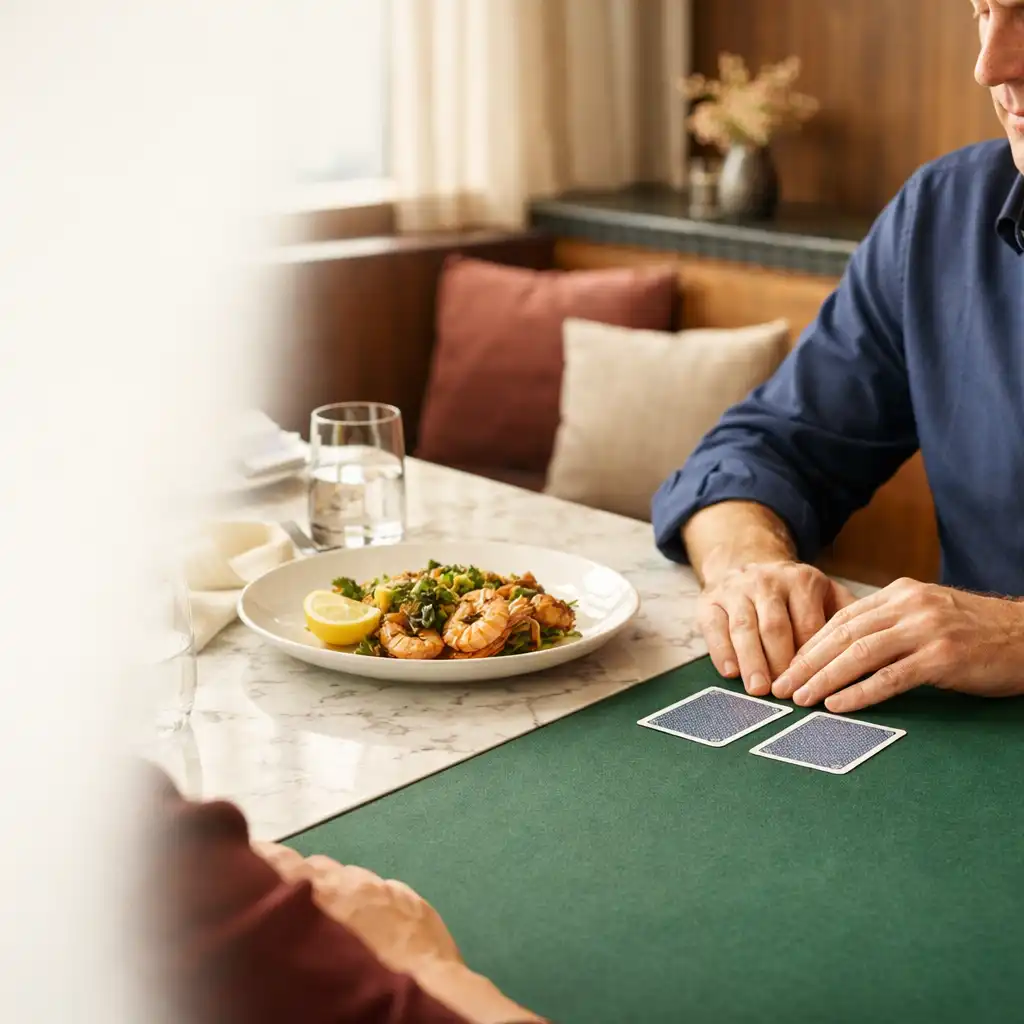
Adult guests at a bright restaurant table with ivory linen, shared food and cards resting nearby

At a glance

The essentials to carry with you

A few clear boundaries can keep a hosted table comfortable, social and easy to step away from. Use these principles before joining, during the evening, and after any session.

1

Entertainment, not pressure

Poker should remain a form of entertainment, never an obligation, a test, or a source of pressure. Join only when the social experience feels comfortable to you. If enjoyment is not the reason to sit down, observing, dining, or simply spending time with companions can be a better choice.

2

Stay within personal limits

Set limits that suit your own time, energy, attention and comfort, then honour them throughout the session. You do not need to explain a decision to pause or leave. A personal boundary is enough, and keeping it is part of taking care of your evening.

3

Choose the right moment

Never play when tired, distressed, or under pressure. Clear attention and personal wellbeing matter. If you are not feeling settled, take time to observe, enjoy the restaurant setting, talk with companions, or return at another time when participation feels more comfortable.

4

Pause, reset, and keep perspective

Do not chase losses. Take regular breaks and return only if participation still feels comfortable. Stepping away for water, food, fresh air, or a conversation is part of a good evening, not a failure. A pause creates room to notice whether enjoyment is still present.

5

Keep a clear head

Avoid playing under the influence of alcohol. This is a respectful choice that supports clear judgement, attention and awareness of your own comfort. It also helps keep the table considerate for staff, dealers and the other guests sharing the experience.

6

Respect the shared table

Respect the venue, staff, dealers, and other guests at all times. Patience, courteous language and attention to hosted-session guidance help everyone settle into the room. A welcoming atmosphere depends on guests giving each other space to participate, observe, pause, or leave without pressure.

7

Stop when enjoyment changes

Stop participating if the experience is no longer enjoyable, comfortable, or right for you. Leaving the table is a positive, self-directed choice. You may reconnect with dining, conversation, or companions instead; there is no need to continue simply because others remain involved.

8

Reach out if control feels difficult

If participation becomes difficult to control, contact appropriate local support services. Seeking support is a sensible next step, not an admission of failure. A private conversation with an appropriate local service can help you put your wellbeing and comfort first.

Before you join

A small self-check before the table

A quiet check-in can make it easier to choose the kind of evening you actually want.

1

Check your reason for joining

Join for the shared social and entertainment experience, not because you feel compelled to keep up with other people. Be honest with yourself before sitting down. Watching or declining is always acceptable, and participation should stay within personal limits rather than anyone else’s expectations.

2

Check your state of mind

Pause if you are tired, distressed, distracted, or under pressure. A clear mind supports more comfortable participation and more considerate choices around others. Take time, enjoy the restaurant setting, or return another evening rather than expecting poker to solve stress or discomfort.

3

Choose a natural stopping point

Choose a personal moment to reassess, such as after a hosted session segment or a break, and honour that decision. Make regular breaks part of the plan. Stopping early is entirely appropriate if enjoyment changes.

The right moment to stop is the moment it no longer feels right.

During the evening

Notice the ordinary cues to pause

A break can be a simple, calm response to a changing mood, energy level, or sense of comfort.

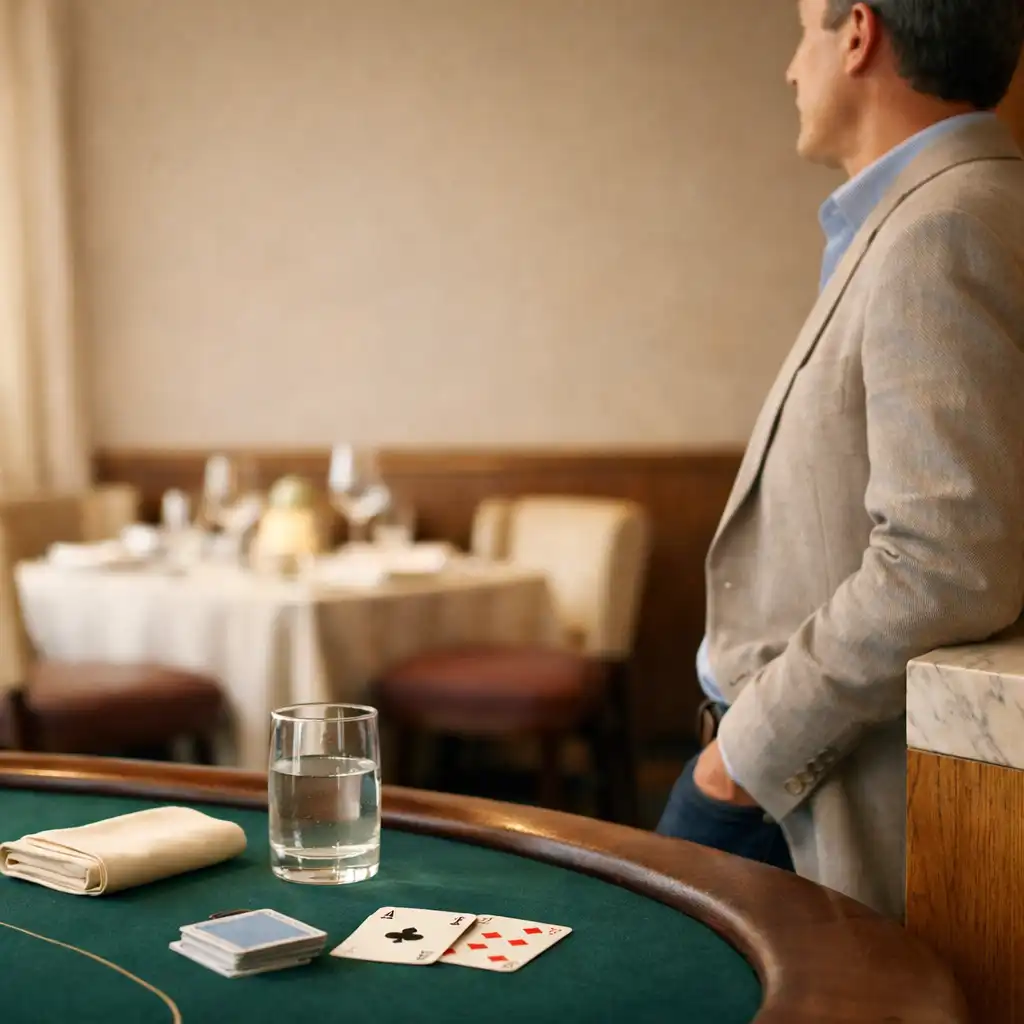
Adult guest taking a calm break beside a bright restaurant poker table with water and cards resting on felt
A deliberate reset can protect attention, comfort and the shared atmosphere.

Pause is valid

Notice pressure building

Feeling rushed, frustrated, uncomfortable, or pressured by other people is a useful cue to pause. Take space rather than reacting at the table. You can choose not to continue, and you do not need to force yourself through a moment that no longer feels settled.

Make room

Take regular breaks before you need one

Build in regular breaks to reset attention, energy and enjoyment. Step away from the table in neutral, unhurried hospitality terms and check in with yourself. Returning is a choice, not an expectation, and clear-headed participation should remain the priority.

Stop and reset

Leave when it no longer feels enjoyable

Ending participation is the right response when the experience is no longer enjoyable or comfortable. A quiet, courteous departure respects both yourself and the shared room. There is no penalty in choosing a different part of the evening instead.

Shared room

A respectful table is a shared responsibility

Good hospitality is supported by guests who make room for their own comfort and the comfort of everyone around them.

1

Respect staff and dealers

Listen to hosted guidance, communicate courteously, and give staff and dealers room to manage the table experience. Attentiveness keeps the shared setting smoother and more welcoming, without asking anyone to know more than they do.

2

Make room for different experience levels

Bring patience for beginners and consideration for experienced guests without turning the table into a test of knowledge. Clear, courteous conversation helps. Guests may observe or pause, and everyone benefits when those choices are treated with ease.

3

Protect the atmosphere for everyone

Personal limits and clear-headed participation help preserve a relaxed room for fellow guests. Avoid playing under the influence of alcohol, and step away when comfort or enjoyment changes. That choice is considerate, not moralising.

Shared consideration is part of the experience: attention to yourself and others helps restaurant dining and hosted offline poker information sit comfortably together.

When a break becomes a stop

Give yourself permission to end participation

Stopping is a practical option whenever continuing no longer fits your comfort, attention or enjoyment.

1

Step away without explanation

You may stop participating when you need to without justifying that decision to other guests. Keep the choice respectful of hosts and the table environment, but let personal comfort be the decision point. If the experience is no longer enjoyable, stepping away is appropriate.

2

Reset away from the table

Use a break to assess whether returning feels genuinely comfortable, rather than responding to pressure or frustration. Never play when tired, distressed, or under pressure. Take regular breaks, avoid playing under the influence of alcohol, and allow a reset to be enough.

3

Choose support when control feels difficult

If participation becomes difficult to control, contact appropriate local support services. Treat that concern seriously and with compassion. Seeking support can be practical and private; it is a step toward protecting your wellbeing, not a sign that you have failed.

A pause can be the right next step

Choosing to stop can protect the kind of evening you want to have. Poker should remain a form of entertainment, with room for comfort, choice and perspective.

Small adult group in relaxed conversation at a bright marble and ivory-linen restaurant dining table

Hospitality first

The evening can stay social

Choosing not to participate, taking a break, or ending a session does not remove you from the social restaurant atmosphere. Aceand Marble presents restaurant dining alongside offline poker information, so conversation and time with companions can remain at the centre of the evening. Poker should remain entertainment, with agency rather than pressure guiding the choice.

1

Observe the table flow

Observation can be a lower-pressure way to take in the hosted setting and decide whether participation feels right at another time. Beginners, experienced players and groups do not need to force activity; calm attention is enough.

2

Make a break part of the plan

Regular breaks can sit naturally within the wider hospitality experience while keeping clear-headed participation in view. Time away from the table is a normal reset, and avoiding participation under the influence of alcohol remains important.

3

Personal choice

Return only if it feels right

Any return to active participation should come from comfort, enjoyment and personal limits, not outside pressure. If pressure is present or enjoyment has changed, pausing or stopping is the agency-forward choice.

Personal check-in

Questions to ask yourself

These prompts are not a diagnostic test. They are a quiet way to consider what feels right now.

Use the answers as a pause point

An uncomfortable answer is a reason to pause, stop, or seek support—not a reason to push ahead. Personal limits matter, and stopping when enjoyment changes is a practical form of care.

In perspective

Keep poker voluntary, clear-headed and enjoyable

The right participation choice is the one that stays within your personal limits. Take regular breaks, stop when enjoyment changes, and respect the venue, staff, dealers and other guests. Poker should remain a form of entertainment, with room to choose a different pace or step away entirely.

Support is an appropriate next step

If participation becomes difficult to control, contact appropriate local support services. This site’s general information can be supplementary, but it is not a substitute for support when you need it.

Read the FAQ